
To request the booking of one of these exhibitions, a form is available below.
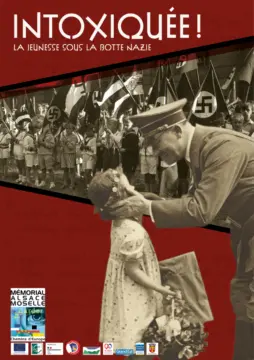
Intoxicated! Youth under the Nazi yoke
The exhibition Intoxicated! Youth under the Nazi yoke aims to show how, in Germany but also in the territories of Alsace and Moselle annexed de facto by the Third Reich in 1940, the Nazi regime used the education system and the Hitler Youth to create total indoctrination and distance young people from any influence other than that of the party. The indoctrination of youth through Nazi ideology was complete. “Wer die Jugend hat, hat die Zukunft” (“He who controls the youth controls the future”), proclaimed Nazi slogans.
What textbooks did these young people have on their desks? What were they taught in history, mathematics, literature? How was Nazi ideology conveyed through these school programs? What activities were offered to young people outside school? For what purpose? How did the party interfere in the social life of youth?
The aim of this exhibition is to show that this indoctrination had only one goal: to control the society of tomorrow.
Quels manuels scolaires ces jeunes ont-ils posé sur leur pupitre ? Que leur enseignaient leurs professeurs en histoire, mathématiques, littérature… ? Comment l’idéologie nazie était-elle véhiculée dans ces programmes scolaires ? Quelles activités étaient proposées aux jeunes en dehors de l’école ? Dans quel but ? Comment le parti régissait-il la vie sociale de la jeunesse ?
L’objectif de cette exposition est de faire comprendre que cet embrigadement n’avait qu’un seul but : contrôler la société de demain.
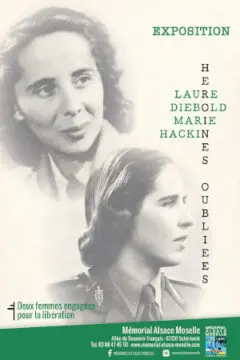
Forgotten heroines Laure Diebold – Marie Hackin
1,038 Companions of the Liberation. 6 women.
One from Moselle: Marie Hackin. One from Alsace: Laure Diebold.
Both were awarded the Cross of the Liberation, the highest distinction of the Resistance. Laure Diebold worked alongside Jean Moulin and Daniel Cordier to unify the Resistance. Arrested and deported, she never revealed any secrets. Marie Hackin joined General de Gaulle in July 1940 and took part in the creation of the first women’s corps of the French army.
But today, who knows the names of these two resistance fighters beyond specialists? This exhibition retraces the lives of these two women, committed from the very beginning against Nazism, yet largely forgotten in collective memory despite their remarkable wartime actions.
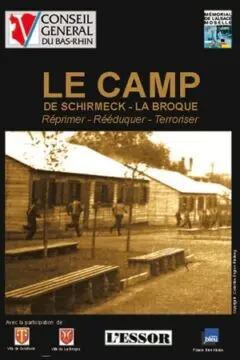
The Schirmeck-La Broque camp
Apart from the former Kommandantur and the building of the former workshops, very few traces remain of the “Sicherungslager Vorbruck-Schirmeck” (Schirmeck-La Broque camp), as the barracks were destroyed after the war to make way for housing.
The first barracks were built by the French administration to house Alsatian families who could not be evacuated to the South-West of France.
This exhibition traces the activity of this security camp through which around 15,000 men and women—Alsatians and Mosellans opposed to the Nazi regime—passed.
Les premières baraques ont été construites par l’administration française pour accueillir des familles alsaciennes qui n’avaient pu être évacuées dans le Sud-Ouest de la France.
Cette exposition retrace l’activité de ce camp de sûreté par lequel passèrent quelque 15 000 hommes et femmes, Alsaciens et Mosellans, réfractaires au régime nazi.
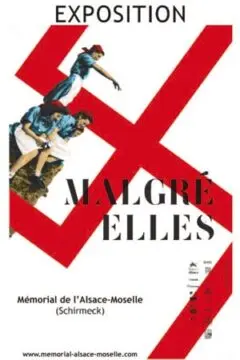
Despite everything
Here is the difficult and sometimes violent fate of young girls from Alsace and Moselle, forcibly enlisted despite themselves in Nazi madness. Germany prepared every woman for submission to the Führer, the Reich, and to men.
A three-stage path: BDM for initiation, RAD for civilian service, then KHD for the war effort.
Girls from this region followed this path like others, but experienced it fully within the harsh and disordered conditions of occupation.
After the war, they would face the shame of having to remain silent and the ingratitude of men who long claimed the prestige of courage.
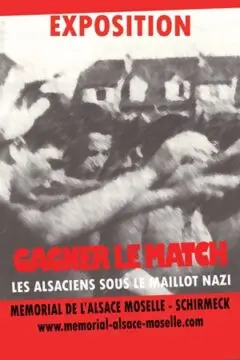
Winning the match: Alsatians under the Nazi jersey
“Millions of bodies trained through sport, imbued with love for the homeland and filled with a fighting spirit, could be transformed into an army within two years.” These were the objectives Hitler assigned to sport in Mein Kampf.
In the aftermath of the French defeat in June 1940, Alsace and Moselle were de facto annexed to the Reich. The totalitarian regime that was quickly established impacted all areas of daily life.
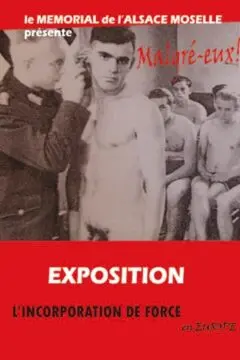
Despite themselves: forced conscription in Europe
When the Wehrmacht was created in 1935, German law restricted compulsory military service to “Reichsdeutsche” (citizens of the Reich).
It was therefore not legally possible to impose conscription on newly annexed populations without first granting them German citizenship.
To overcome this, German authorities selected part of these populations and granted them the status of “Volksdeutsche” (ethnic Germans), based on racial criteria such as the origin of grandparents, or cultural criteria such as the language spoken.